How to Choose the Right Hydraulic Control Valve for Your Needs?
Choosing the right hydraulic control valve is critical for efficiency and performance in various applications. According to a recent industry report by MarketsandMarkets, the hydraulic valve market is projected to reach $12 billion by 2025, with a CAGR of 4.5%. This growth highlights the importance of selecting the right components to meet industrial demands.
Industry expert Dr. Linda Stein, a leading authority on hydraulic systems, states, “Choosing the right hydraulic control valve can significantly impact system efficiency and longevity.” Her insights emphasize that factors like pressure ratings, flow control, and compatibility with other components are pivotal.
In a world with increasing automation and complex hydraulic systems, making informed decisions is essential. An inappropriate choice can lead to system failures and increased costs. Reflecting on past decisions, many professionals discover that initial assessments missed crucial performance metrics. Thus, a thorough understanding of hydraulic control valves is not just beneficial; it is necessary for operational success.
Understanding the Basics of Hydraulic Control Valves
Hydraulic control valves are crucial in many applications. They manage fluid flow and pressure in hydraulic systems. Understanding their basics is essential for making the right choice. These valves come in various types, such as proportional, directional, and pressure relief valves. Each type serves a unique purpose and operates differently.
One critical aspect is valve size. According to industry reports, nearly 40% of hydraulic system failures result from misconfigured valve sizing. A valve too large or small can cause inefficiencies and damage. For instance, undersized valves can restrict flow, leading to overheating. Conversely, oversized valves may lead to poor system response and control.
Another factor to consider is material compatibility. Hydraulics often involve harsh environments. Reports indicate that up to 30% of failures arise from material degradation. Selecting a valve made from appropriate materials, considering the fluid chemistry, is vital. Such attention to detail can prevent costly downtime and enhance system longevity.
Identifying Your Specific Applications and Requirements
Choosing the right hydraulic control valve involves understanding your specific applications and requirements. Assess the type of fluid and its properties. Think about pressure and flow rates; these are crucial factors. Identify if you need proportional control or on/off capabilities. Each application may have unique demands, so it’s important to analyze them thoroughly.
Tips: Evaluate the environment where the valve will operate. High temperatures or corrosive substances may affect performance. Always consider compatibility. A mismatch can lead to failure. Testing different valves can provide insights that specifications alone may not reveal.
Don't overlook the importance of maintenance. Regular checks can prevent failures. Talk to professionals who have experience in the field. Their expertise can guide you through the nuances of hydraulic systems. Be aware that your choices should reflect long-term reliability, not just immediate needs.
Hydraulic Control Valve Specifications Comparison
Evaluating Different Types of Hydraulic Control Valves
Selecting the ideal hydraulic control valve requires understanding its various types. The two main categories are directional control valves and pressure control valves. Directional control valves manage the flow direction of hydraulic fluid. They can be manual, pneumatic, or electrically actuated. According to industry reports, electric valves can improve response time by up to 30% compared to manual valves. This efficiency can significantly enhance the performance of hydraulic systems.
Pressure control valves, on the other hand, regulate pressure levels within a hydraulic system. These valves help prevent system overloads. A common type is the relief valve, which opens to allow fluid to escape when pressure exceeds a certain threshold. Research indicates that a well-calibrated relief valve can enhance system lifespan by providing necessary protection. However, improper selection can lead to inefficiencies and even system failure.
When evaluating hydraulic control valves, take into account system compatibility. Consider flow rates, pressure ranges, and temperature variations. A mismatch can result in operational complications. Many users report difficulties in adjusting settings for optimal performance. Ultimately, thorough research and consultation with experts can lead to better choices. Understanding the unique characteristics of each valve type is essential for effective hydraulic system design.
Assessing Valve Specifications and Performance Factors
When choosing a hydraulic control valve, understanding specifications is crucial.
Pressure ratings define the valve's ability to handle system requirements. Each application may demand different tolerances for pressure and flow. Knowing the maximum and minimum requirements prevents failures.
Flow rate is another vital factor. It determines how quickly hydraulic fluid can move through the system. If the flow rate is too low, performance suffers. Too high of a flow rate can lead to excess energy consumption and wear on components. Understanding your specific needs will help in making the right choice.
Also, consider the valve's response time. A quick response ensures better system control. Different applications might need varying levels of responsiveness. Inspecting seal material is important, too. It affects the valve's durability and performance under various conditions. Reflect on these factors to find a valve that truly meets your requirements.
Making the Final Decision: Testing and Compatibility Considerations
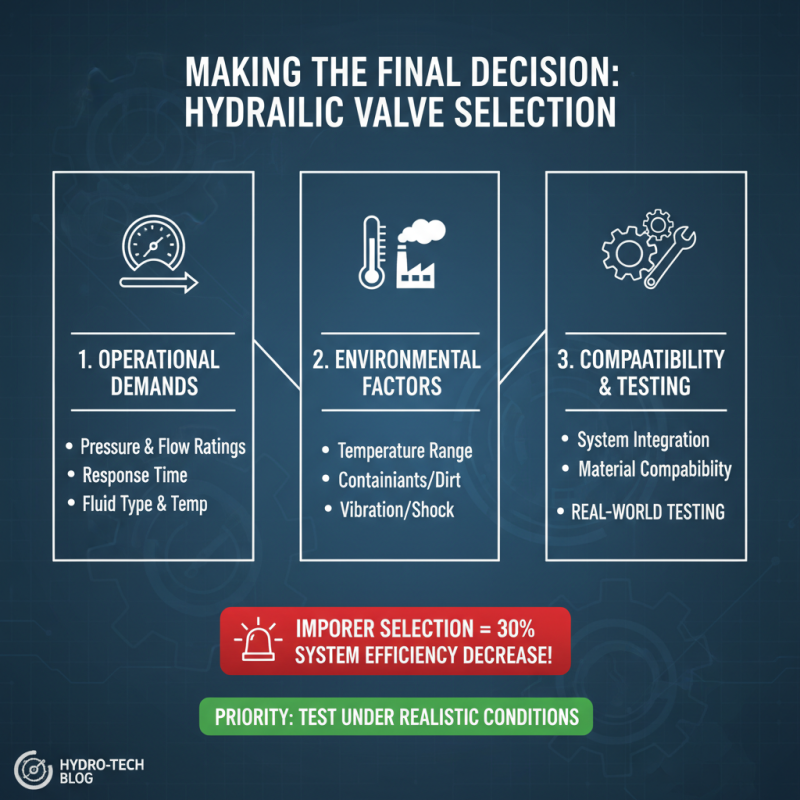
Testing and compatibility considerations are critical when selecting hydraulic control valves. Understanding the specific operational demands and environmental conditions is essential. Industry reports suggest that improper valve selection can result in a 30% decrease in system efficiency. Therefore, testing each potential valve in realistic conditions must be a priority.
Compatibility with existing systems is another crucial factor. For instance, material compatibility can affect the valve's longevity and performance. A study from the Fluid Power Institute indicates that over 40% of hydraulic failures arise from incompatible materials. Properly assessing each valve’s specifications against system requirements minimizes risks.
Also, performance under dynamic conditions should be evaluated. Hydraulic valves often experience fluctuations in pressure and flow. Run tests under various operational scenarios to gather data. Adjustments may be necessary later, depending on the outcomes. These steps can guide users toward informed decisions, enhancing hydraulic system reliability and efficiency.