Leave Your Message
Choosing a valve manufacturer is not just a matter of comparing prices. A Bubble Tight Butterfly Valve must close reliably under clearly defined operating conditions. Pressure, temperature, media, and cycle frequency all affect performance. Small differences in seat design or disc finish can influence sealing and service life. That matters. This overview introduces ten Chinese manufacturers for buyers seeking a practical starting point, not a substitute for technical evaluation.
The comparison focuses on details that can be checked: product range, materials, pressure ratings, actuation options, and quality documentation. Buyers should confirm the required leakage criteria and test conditions before requesting a quotation. Ask for dimensional drawings, material records, and relevant inspection reports. A catalogue alone is not enough. Even a polished datasheet can leave questions about operating limits or long-term wear.
China’s valve sector includes manufacturers serving water treatment, HVAC, power, and general industrial applications. Their capabilities vary, so verify each supplier against your own service conditions. This article’s list is intended to support that review, rather than imply that one maker suits every project. No shortlist can replace a real test. Use the profiles to prepare focused questions, compare evidence, and identify which manufacturer deserves a closer technical discussion.
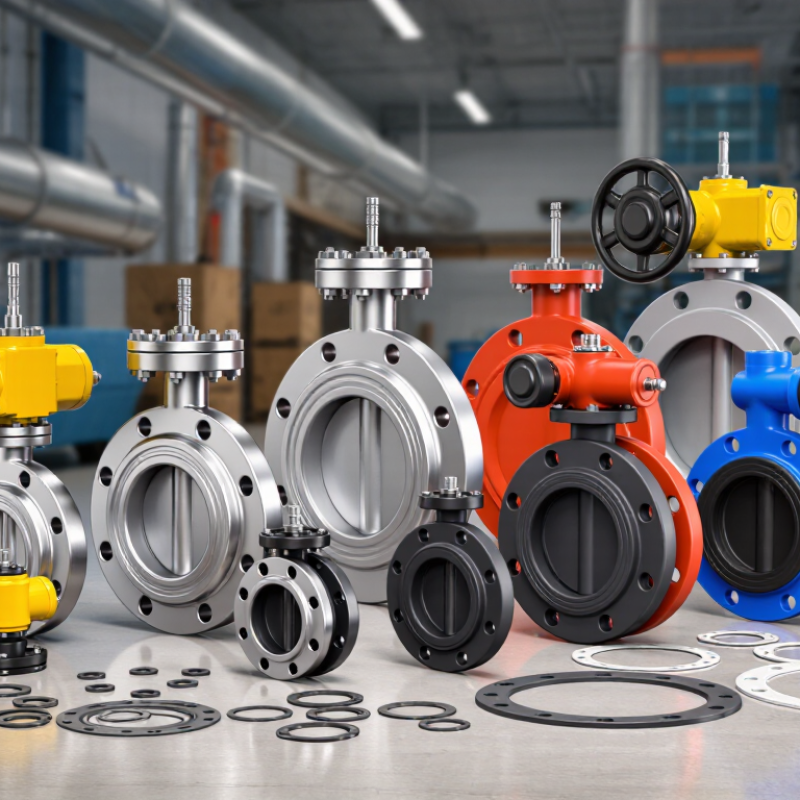
A bubble-tight butterfly valve is expected to show no visible leakage across its closed disc during a defined pressure test. It does not mean zero molecular movement under every temperature, pressure, or fluid condition. The test medium matters. So does the specified direction of pressure.
ISO 5208:2015 sets out industrial-valve pressure tests and leakage-rate classifications; Rate A allows no visually detectable leakage during the stated test. API 598 likewise gives inspection and acceptance criteria, including for resilient-seated valves. These references make “bubble-tight” measurable, not merely a sales phrase. Buyers should request the test standard, pressure, duration, and recorded result.
On a test bench, technicians check the seat while the disc is closed and watch for leakage at the outlet. Small details matter: disc alignment, seat condition, and actuator torque can change the result. A pass is useful evidence, but not a guarantee for every operating cycle. That distinction is easy to overlook. Temperature shifts, abrasive particles, or repeated cycling may affect sealing, so the test conditions should resemble the service as closely as practical.
A manufacturer-selection checklist focused on verifiable product and quality evidence. “Bubble-tight” describes leakage performance under specified test conditions; it does not imply zero leakage under every operating condition.
| No. | Evaluation dimension | What to verify | Why it matters for bubble-tight performance |
|---|---|---|---|
| 1 | Seat-leakage test standard | Request the stated test standard, leakage acceptance criterion, test medium, pressure, duration, and valve size for the specific model. ISO 5208 and EN 12266-1 define industrial-valve testing and leakage-rate classifications. | “Bubble-tight” should be tied to a defined acceptance criterion and test procedure, rather than used as an unqualified marketing term. |
| 2 | Meaning of the leakage claim | Confirm whether the claim means no visible leakage during a specified seat test, and whether the criterion applies to both flow directions or only one. | Leakage performance depends on the test method, direction, pressure, and acceptance rate; the claim should identify these limits. |
| 3 | Pressure and temperature limits | Check the published pressure-temperature ratings for the complete valve assembly, including the body, seat, disc, stem, and any applicable end connection. | A valve that passes a room-temperature test may not maintain the same sealing performance at its operating temperature or pressure limit. |
| 4 | Seat material and service compatibility | Identify the seat material and verify its stated temperature range and compatibility with the process fluid. Common resilient-seat materials include EPDM, NBR, and PTFE; suitability is application-dependent. | Seat condition and compatibility directly affect sealing, wear, and service life. |
| 5 | Body and disc materials | Request material specifications for pressure-containing parts and wetted components, along with traceability documentation when required by the project. | Corrosion, erosion, or material incompatibility can damage sealing surfaces and compromise shutoff performance. |
| 6 | Disc and seat design | Review sectional drawings and product documentation for the disc edge, seat retention, shaft arrangement, and design details relevant to the intended service. | The geometry and condition of the disc-to-seat contact determine how the valve achieves shutoff. |
| 7 | Production inspection and test records | Ask for model-specific inspection and pressure-test records, including test date, identification, applied pressure, test direction, and recorded result. | Traceable records help demonstrate that the delivered valve—not just a similar product—was tested against the stated requirements. |
| 8 | Size and pressure-class coverage | Check the documented size range, pressure ratings, face-to-face dimensions, and connection details for the exact configuration being quoted. | Performance and dimensions can vary by size, pressure rating, and design; verify the actual configuration rather than relying on a general product range. |
| 9 | Actuation and torque data | For actuated valves, request operating torque information and confirm actuator sizing for the service conditions. ISO 5211 specifies mounting dimensions for part-turn actuators and valve attachments. | Correct mounting and actuator sizing support reliable operation; ISO 5211 mounting compatibility alone does not certify seat-leakage performance. |
| 10 | Application-specific qualification | Confirm whether additional requirements—such as fire testing, emissions control, potable-water approval, or special coating—apply, and request evidence for the exact valve configuration. | These qualifications address particular service or regulatory needs and should not be treated as substitutes for a specified seat-leakage test. |
Procurement note: compare manufacturers using the same valve size, materials, pressure-temperature limits, test standard, leakage criterion, and test direction.