request to quote
Leave Your Message

2026 Best GGG50 Butterfly Valve Suppliers for Global Buyers

Choosing reliable suppliers for Ggg50 Butterfly Valve products requires more than comparing online prices. Global buyers must examine material quality, production experience, testing discipline, and export support. GGG50 ductile iron should match the project’s pressure, temperature, and media requirements. A valve may look robust, yet poor machining can cause seat leakage or difficult operation.

This 2026 guide reviews suppliers through practical buying criteria. It considers casting control, disc accuracy, rubber seat options, coating thickness, pressure testing, and traceable inspection records. Factory capacity also matters. A dependable supplier should explain lead times clearly, provide dimensional drawings, and support sample approval before mass production. Documentation can include material certificates, test reports, quality records, and relevant conformity declarations.

Details matter.

Global projects often face changing freight costs, regional standards, and uncertain delivery schedules. Supplier websites may contain outdated information, so buyers should verify current certifications and factory capabilities directly. No supplier fits every application. That is worth remembering. Some manufacturers offer excellent pricing but limited engineering support. Others provide stronger technical service with higher initial costs.

The following supplier review aims to help purchasing teams make informed decisions. It combines technical evaluation with practical observations from valve sourcing, factory communication, and project coordination. Buyers should still confirm specifications with qualified engineers before ordering. A careful comparison can reduce leakage risks, avoid installation delays, and improve long-term operating reliability.
2026 Best GGG50 Butterfly Valve Suppliers for Global Buyers

What Is a GGG50 Butterfly Valve and Where Is It Used?

What Is a GGG50 Butterfly Valve and Where Is It Used?

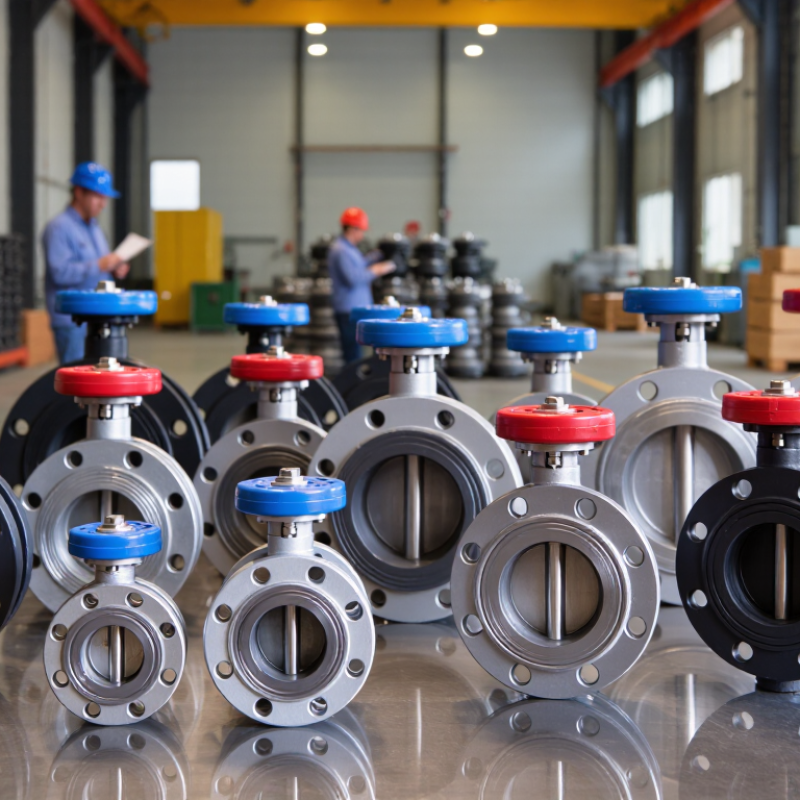
A GGG50 butterfly valve uses ductile iron for its body and disc components. GGG50 is an older designation commonly associated with EN-GJS-500-7 ductile iron. It offers approximately 500 MPa tensile strength and good impact resistance. The valve controls flow through a quarter-turn disc. It is compact, light, and practical for large pipelines.

Typical applications include municipal water, wastewater treatment, HVAC systems, irrigation, and selected fire-protection networks. GGG50 performs well in clean or moderately treated water. It needs suitable coating and lining in aggressive fluids. Saltwater service requires careful material review. Do not assume the grade alone provides corrosion protection.

Fortune Business Insights valued the global industrial valves market at USD 77.58 billion in 2023. Its report also projects continued growth through 2032, supported by water infrastructure and industrial automation. This wider market trend increases demand for dependable butterfly valves. However, market growth does not replace technical verification.

EN 593 helps define industrial butterfly valve requirements, while ISO 5211 supports actuator mounting dimensions. Buyers should check pressure class, temperature range, seat material, shaft design, testing records, and coating thickness. PN10 and PN16 are common choices, but not universal.

A practical field lesson remains: a cheaper valve may create higher maintenance costs later. Supplier documents can still contain gaps. Review them carefully.

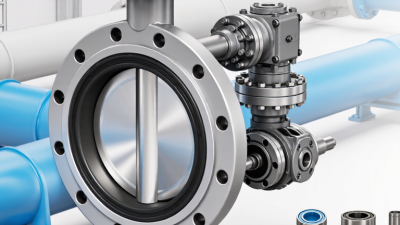
Key Selection Criteria for Global Butterfly Valve Buyers

Selecting a GGG50 butterfly valve supplier requires more than comparing unit prices. Global buyers should verify the ductile iron grade through material certificates and independent inspection records. Ask for pressure-test results, dimensional drawings, and clear identification of the applicable design standard. Missing documents are a warning sign.

Match the valve to the actual service conditions. Check pressure, temperature, media, line size, and installation direction. Seat materials matter when the pipeline carries abrasive, corrosive, or high-temperature media. Confirm whether the disc, stem, and fasteners suit the operating environment. Coating thickness also deserves attention, especially for humid storage or marine transport.

Look beyond the valve itself.

A reliable supplier should provide traceable batches, stable lead times, export packaging, and responsive technical support. Request photographs of finished products and packing details before shipment. Review warranty terms carefully, including exclusions and response procedures. Experience with local customs documentation can prevent avoidable delays.

Do not accept vague claims about lifetime or universal compatibility. Field conditions often differ from the original specification. A valve that performs well in clean water may fail early in a slurry line. This is where supplier engineers should ask practical questions, not simply send a quotation. Remote support can help, but it cannot replace proper inspection. No checklist is perfect. Buyers should also assess spare-seat availability, actuator compatibility, and after-sales communication across time zones. A cheaper offer may still be costly when one missing certificate delays commissioning.

2026 Best GGG50 Butterfly Valve Suppliers for Global Buyers – Key Selection Criteria for Global Butterfly Valve Buyers

Use these EN-GJS-500-7 reference values, commonly associated with the GGG50 designation, when reviewing material certificates and supplier technical documentation. The values apply to castings with a wall thickness up to 30 mm under EN 1563:2018: minimum tensile strength of 500 MPa, minimum 0.2% proof stress of 320 MPa, and minimum elongation of 7%. Buyers should also verify pressure-class compliance, dimensional standards, testing records, traceability, and applicable certifications before approving a supplier.

How to Evaluate GGG50 Butterfly Valve Suppliers

When evaluating GGG50 butterfly valve suppliers, I begin with evidence, not attractive catalog images. A polished brochure is not proof.

Ask for the valve’s material certificate, pressure rating, and applicable testing standard. Confirm whether documents identify each batch and heat number. Reliable suppliers explain how graphite iron composition, body thickness, shaft material, and seat selection match the service medium. Their engineers should discuss pressure, temperature, flow direction, and operating frequency without vague promises. I also request drawings with exact dimensions. Small mismatches can delay installation.

Factory capability deserves direct checking. Review machining equipment, casting controls, coating preparation, assembly areas, and inspection records. Hydrostatic shell tests and seat leakage tests should show pressure, duration, acceptance criteria, and inspector signatures. Ask for recent sample reports, not empty templates. A supplier that avoids technical questions may create expensive uncertainty. For export projects, inspect packaging details. Valves need protected sealing surfaces, dry storage, clear tags, and corrosion-resistant packing. Traceable serial numbers simplify later maintenance.

Commercial reliability is broader than price. Compare response time, production capacity, spare-part availability, warranty terms, and handling of nonconforming valves. Speak with recent customers using similar water, HVAC, industrial, or fire-service systems. Independent inspection can help with large orders. I have learned that delivery promises often hide assumptions about approvals and transport. Clarify every milestone in writing. No supplier is perfect. The best one admits limitations, records deviations, and proposes practical corrections before shipment.

2026 Best GGG50 Butterfly Valve Suppliers for Global Buyers - How to Evaluate GGG50 Butterfly Valve Suppliers

Evaluation Dimension What Global Buyers Should Check Recommended Benchmark or Reference Suggested Weight Required Evidence
GGG50 Material Verification Confirm that the valve body and other specified ductile-iron components match the purchaser’s material requirement and application conditions. GGG50 is commonly associated with EN-GJS-500-7. The exact grade, chemistry, mechanical properties, coating, and component location should be stated in the technical specification. 15% Heat-number traceability, material certificate, chemical analysis, mechanical-test results, and casting inspection records.
Pressure Class and Design Review nominal size, pressure rating, temperature range, media compatibility, face-to-face dimensions, and installation orientation. The design should comply with the applicable butterfly-valve standard, such as EN 593 or API 609, as specified in the purchase order. 12% Approved dimensional drawing, pressure-temperature chart, design calculation, and applicable standard declaration.
Pressure and Seat Testing Verify shell integrity, seat tightness, test medium, test duration, and acceptance criteria for every agreed inspection lot. Testing should follow the standard stated in the contract, commonly EN 12266-1 or API 598. Acceptance limits must be documented rather than assumed. 15% Signed test reports, calibrated-gauge records, test-pressure values, test duration, and inspection-release documentation.
Corrosion Protection Assess coating type, preparation method, dry-film thickness, edge coverage, adhesion, and suitability for water, wastewater, marine, or industrial service. Specify the coating system and target dry-film thickness in the purchase order. Coating performance depends on the selected system and service environment. 10% Coating technical data sheet, surface-preparation record, thickness readings, adhesion results, and holiday-test report where applicable.
Disc, Stem, and Seat Materials Match wetted materials to fluid chemistry, temperature, abrasion level, and operating frequency. The supplier should provide a complete bill of materials. Elastomer selection must be based on actual media and temperature, not only nominal pressure class. 10% Material certificates, elastomer compatibility data, temperature limits, shaft-design details, and replaceable-seat information.
Actuator and Mounting Compatibility Check operating torque, safety factor, actuator type, electrical or pneumatic requirements, mounting dimensions, and fail-position requirements. For quarter-turn valve mounting, verify the applicable ISO 5211 interface and confirm that actuator sizing uses tested valve torque data. 8% Torque chart, actuator sizing calculation, mounting drawing, wiring or air-supply requirements, and functional-test report.
Quality Management System Evaluate document control, nonconformance handling, corrective actions, calibration, supplier control, and final inspection procedures. An ISO 9001 certificate from an accredited certification body is a useful baseline, but it should not replace product-level inspection. 8% Current certificate, scope of certification, audit status, quality manual summary, inspection plan, and sample nonconformance report.
Traceability and Documentation Ensure each valve can be traced from purchase order through casting, machining, assembly, testing, coating, and shipment. For quality-critical projects, request EN 10204 Type 3.1 inspection documents when required by the contract. 7% Nameplate details, serial-number register, inspection and test plan, 3.1 certificates where specified, and final data book index.
Production and Inspection Capacity Assess machining capability, pressure-test equipment, coating facilities, inspection staffing, and capacity for repeat orders. Capacity should be demonstrated using the buyer’s required sizes, quantities, delivery schedule, and inspection requirements rather than a general production claim. 5% Factory audit report, equipment list, process flow, production-capacity statement, and recent inspection records with confidential data removed.
Delivery and Supply-Chain Reliability Review realistic lead time, manufacturing location, export documentation, packaging, spare-parts availability, and contingency planning. Compare quoted lead time with documented production capacity and require milestone dates for drawing approval, production, testing, and dispatch. 5% Production schedule, packing specification, shipping documents, stock policy, spare-parts list, and delivery-performance records.
Commercial and Lifecycle Value Compare total cost, warranty terms, maintenance requirements, replacement-seat availability, technical support, and cost of nonconformance. Evaluate total landed cost and expected service life instead of comparing purchase price alone. 5% Itemized quotation, warranty conditions, spare-parts pricing, maintenance instructions, service response terms, and exclusions.
Total Suggested Evaluation Weight 100% Use the weighting as a starting point and adjust it for the valve’s service conditions and project risk.

Top Supplier Types and Regional Sourcing Options in 2026

For global buyers, supplier type matters as much as geography. An integrated foundry controls ductile iron chemistry, casting, machining, and coating. This can improve traceability for GGG50 butterfly valves. Specialized valve assemblers may offer broader sizes, actuators, and customized connection standards. Distributors are faster for urgent replacement orders. Their stock depth can be limited, however. Engineering procurement firms suit large water, energy, and infrastructure projects. They usually manage inspection, documentation, and shipment coordination.

East Asian suppliers often provide strong casting capacity and competitive production costs. European suppliers may offer tighter documentation and closer alignment with regional standards. South Asian and Middle Eastern sources can support project-based orders and shorter regional communication chains. According to the World Bank’s Logistics Performance Index 2023, 139 economies were assessed across customs, infrastructure, logistics competence, and timeliness. That matters. A lower unit price can lose value through port delays, rework, or unclear export documents.

Buyers should request EN-GJS-500-7 or equivalent material certificates, pressure-test records, coating thickness readings, and dimensional inspection reports. The 2024 UNCTAD Review of Maritime Transport states that seaborne trade carries over 80% of global merchandise trade by volume. Freight planning is not optional. Ask for the valve’s pressure class, seat material, shaft design, and operating temperature in writing. A factory audit should include heat-number tracking and random body-wall measurements. One weakness remains: supplier websites rarely show failure data. Independent inspection is still worth the cost.

Ordering, Quality Inspection, and International Delivery Considerations

Global buyers should treat GGG50 butterfly valve purchasing as a controlled engineering process, not a price comparison. GGG50 usually refers to EN-GJS-500-7 ductile iron, so request the casting standard, heat number, chemical analysis, and mechanical test results. Ask for EN 10204 3.1 inspection certificates. Confirm pressure class, seat material, shaft material, flange dimensions, coating thickness, and operating temperature before placing an order. Small specification gaps can create expensive installation problems.

Quality inspection should combine documents and physical checks. Inspectors should verify body markings, bore dimensions, flange alignment, disc movement, gearbox operation, and actuator torque. Require pressure tests under ISO 5208, with recorded shell and seat leakage results. The International Organization for Standardization provides test classifications, but buyers still need to define acceptance levels clearly.

A clean report is not proof of consistent production. Sampling plans can miss defects, especially when batches are rushed. I would include independent inspection for first orders and critical projects.

International delivery needs practical planning. The World Bank’s 2023 Logistics Performance Index collected responses from 4,090 logistics professionals across 139 countries, highlighting customs, infrastructure, and shipment reliability as major factors. Confirm Incoterms 2020, export documents, packing dimensions, gross weight, and insurance responsibility. UNCTAD reports that maritime transport carries over 80% of global merchandise trade, so port congestion remains a real risk.

Use corrosion-resistant wrapping, shock indicators, and dry containers where suitable. Delivery estimates can still fail. Build buffer time.