Leave Your Message
Choosing among China’s top EN1074 butterfly valve suppliers requires more than comparing prices or polished websites. The right supplier should demonstrate practical manufacturing experience, technical control, and dependable after-sales support. A reliable En1074 Butterfly Valve must perform consistently in water transmission, treatment plants, and industrial pipeline systems.
Look for manufacturers that clearly explain their design standards, pressure ratings, sealing materials, and testing procedures. Ask for material certificates, dimensional inspection records, pressure test reports, and traceability documents. Ductile iron bodies, stainless-steel shafts, and EPDM seats may suit many water applications, but the correct choice depends on temperature, medium, and operating frequency. Small details matter. A clean flange face and smooth disc movement often reveal disciplined production.
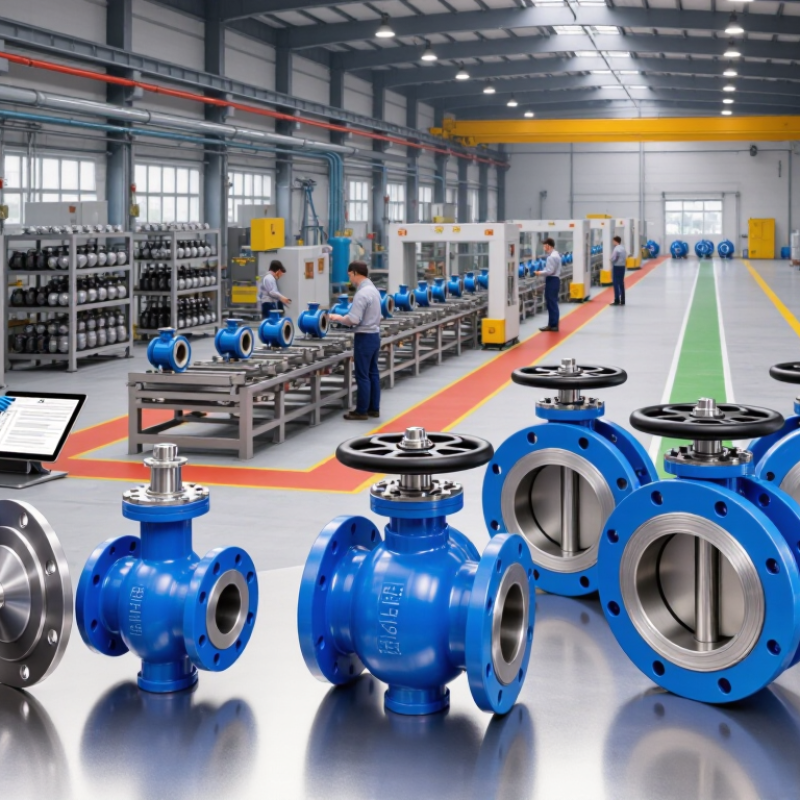
Factory experience is valuable. However, experience alone is not proof. Visit the production line when possible, or request live inspection evidence from machining, assembly, coating, and testing areas. Independent certifications can support confidence, but certificates should match the actual factory and product model. Some suppliers present broad approvals that do not cover every En1074 Butterfly Valve they sell.
Supplier rankings can mislead. Low prices can hide weaker coatings, inconsistent tolerances, or limited technical service. I have also seen detailed documents fail to predict field performance. That possibility deserves attention. Compare sample valves, warranty terms, delivery records, spare-part availability, and communication quality before making a decision. The best supplier is not always the largest one. It is the manufacturer that answers clearly, tests honestly, and accepts responsibility when something needs improvement.
China Top EN1074 Butterfly Valve Suppliers: How to Choose
EN 1074-2 defines performance requirements for isolating valves used in water systems. It covers butterfly valve design, operating behavior, pressure performance, and testing. These details matter in pumping stations, reservoirs, and buried pipelines. A valve may look robust, yet poor seat sealing can waste treated water and increase maintenance. The WHO/UNICEF Joint Monitoring Programme reported that 2.2 billion people lacked safely managed drinking water in 2022. Reliable isolation equipment therefore supports both efficiency and public health.
When evaluating China-based suppliers, request EN 1074-2 test records, material traceability, pressure-test results, and coating specifications. Confirm that the valve suits drinking water, wastewater, or raw-water service. Check torque data against the actuator, especially for large-diameter pipelines. Field experience shows that installation space and operating frequency are often underestimated. That mistake can become expensive. EN 1074 compliance is valuable, but certification alone does not prove long-term reliability. Supplier audits, sample inspections, and independent verification remain sensible.
Tips: Compare the exact standard edition and testing scope. Ask for batch records, not only brochures. Inspect rubber seat materials and flange dimensions. Review spare-part availability and corrosion protection. A useful question is simple: can the supplier explain how test results reflect your actual pressure, temperature, and water chemistry? If the answer feels vague, pause. Supplier selection should be evidence-led, though no checklist can replace competent site supervision.
| Evaluation Dimension | Relevant Standard or Requirement | Key Data to Request from a Supplier | Why It Matters in Water Systems | Recommended Selection Check |
|---|---|---|---|---|
| Product scope | EN 1074-1 provides general requirements for valves used in water-supply systems. EN 1074-2 covers isolating valves, including butterfly-valve applications. | Applicable standard edition, valve type, intended service, nominal diameter range and declared pressure designation. | Confirms that the valve is designed for water-supply isolation rather than only for general industrial service. | Require a product datasheet and a written statement identifying the applicable parts of EN 1074. |
| Pressure rating | EN 1074 does not create one universal pressure rating for every butterfly valve. The declared PN or other pressure designation must match the design conditions. | Declared PN, allowable operating pressure, pressure-temperature limitations, minimum and maximum operating temperature, and pressure-test values. | Prevents leakage, structural damage and unsafe operation when the valve is exposed to static head, surge or pump conditions. | Compare the supplier’s rating with the system design pressure, transient pressure and project specification; do not select by DN alone. |
| Valve body and disc material | Materials should be clearly identified and suitable for the water chemistry, pressure class and operating environment. | Material grade for body, disc, shaft, fasteners and seat; applicable material certificates; corrosion-resistance information. | Material compatibility influences service life, torque stability, corrosion resistance and the risk of contamination. | Check certificates against the purchase specification and confirm suitability for treated water, raw water or wastewater service. |
| Sealing performance | EN 1074 requirements should be read together with the specified valve design and applicable pressure-test procedures, such as EN 12266-1 where contractually required. | Seat type, sealing direction, allowable leakage class or acceptance criterion, test medium, test pressure and test duration. | Reliable shut-off reduces treated-water loss, protects maintenance staff and limits uncontrolled flow during isolation. | Ask for a routine pressure-test report or inspection record for each production lot or each valve, as required by the contract. |
| Face-to-face dimensions | EN 558 is commonly used for standardized face-to-face dimensions of metallic valves when specified by the project. | Face-to-face series, actual dimensions, flange drilling details and dimensional drawings. | Correct dimensions allow replacement or installation without pipe alteration, unexpected offsets or additional dismantling. | Verify the drawing against the pipeline layout and the selected face-to-face series before purchase. |
| Flange compatibility | Flange interfaces should comply with the specified flange system, such as EN 1092-2 where applicable. | Flange standard, nominal size, pressure designation, bolt-hole pattern, flange outside diameter and gasket requirements. | Interface errors can cause installation delays, uneven gasket compression and leakage at pipeline joints. | Match both mating flanges and confirm whether the valve is intended for wafer, lugged or flanged installation. |
| Operating torque | Torque depends on diameter, pressure differential, seat design, flow conditions and operating frequency; EN 1074 compliance alone does not establish one universal torque value. | Breakaway torque, running torque, maximum shaft torque, safety factor and torque values at specified pressure differentials. | Correct torque sizing prevents actuator overload, incomplete closure and damage to the stem or seat. | Size the actuator using the supplier’s verified torque curve, not only a nominal actuator output. |
| Actuator and control interface | Manual, electric, pneumatic or hydraulic actuation must match the operating philosophy and control system. ISO 5211 may be specified for actuator mounting interfaces. | Actuator type, power supply, enclosure rating, mounting interface, position indication, limit switches, fail position and emergency operation. | Ensures that the valve can be operated safely during normal service, power loss and emergency isolation. | Check the actuator duty cycle, environmental protection, available power and control-signal requirements. |
| Installation orientation | Installation instructions must define allowable orientation, flow direction if applicable, clearance and support requirements. | Installation manual, recommended shaft orientation, minimum clearance, pipeline support requirements and commissioning procedure. | Incorrect orientation or insufficient clearance can increase wear, restrict disc movement or prevent maintenance access. | Review the installation drawing with the pipeline contractor before fabrication and site delivery. |
| Coating and corrosion protection | Coating selection should reflect buried, exposed, submerged, marine or chemically aggressive service conditions. | Coating system, surface-preparation method, dry-film thickness, holiday-test method and repair procedure. | Durable protection reduces external corrosion and supports long-term reliability in valve chambers and buried pipelines. | Specify the required coating system and inspection records instead of accepting an undefined phrase such as “epoxy coated.” |
| Drinking-water suitability | For potable-water service, materials and coatings must comply with the applicable national or regional requirements for contact with drinking water. | Declaration of conformity, material composition, coating approval, test reports and migration or extractables documentation where required. | Prevents unsuitable materials from affecting water quality and supports regulatory acceptance. | Confirm the approval is valid for the destination market and the exact wetted materials used in the valve. |
| Factory quality control | Supplier quality procedures should cover dimensional inspection, material traceability, assembly checks and pressure testing. | Quality plan, inspection and test plan, calibration records, batch traceability, nonconformance procedure and final inspection report. | Documented quality control reduces variation between production batches and simplifies acceptance at the project site. | Prefer suppliers that can provide traceable records linked to the valve serial number or production batch. |
| Documentation package | Documentation should be agreed in the purchase order and aligned with the applicable EN 1074 requirements and project specifications. | Approved drawings, datasheets, operation and maintenance manuals, certificates, test reports, spare-parts list and warranty terms. | Complete documentation supports approval, installation, commissioning, maintenance and future replacement. | Use a document-submittal checklist and make missing documents a defined acceptance item. |
| Supplier capability | Supplier selection should be based on technical compliance, manufacturing control and after-sales support rather than price alone. | Relevant project references without relying on brand claims, production capacity, lead time, inspection access, spare-parts availability and service response. | A capable supplier is more likely to deliver consistent valves and provide practical support throughout the asset life cycle. | Assess technical replies, sample documents, factory-audit results and realistic delivery commitments. |